In this heartfelt and personal episode, Amanda opens up about the unexpected role the musical Wicked played in her journey of leaving the IBLP cult and rediscovering herself. From its powerful themes of challenging authority to embracing individuality, Amanda shares how the story of Elphaba’s courage and defiance resonated deeply during her deconstruction and healing process. With raw vulnerability, she recounts the moments when Wicked’s music and lyrics felt like a lifeline, inspiring her to “defy gravity” and chart a new path. Whether you’re a fan of Broadway or navigating your own personal struggles, this episode is a reminder that even the most unexpected things—like a stage musical—can be a source of hope and strength. Tune in to hear Amanda’s reflections, her favorite songs from the show, and why Wicked remains a meaningful part of her story.
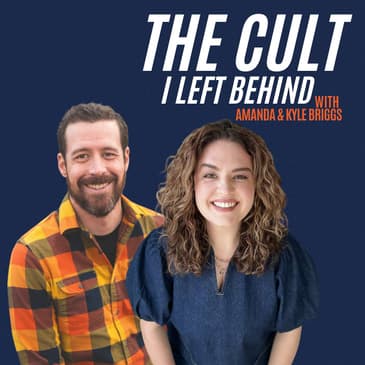
[00:00:01] Hi everyone, welcome to The Cult I Left Behind podcast. I'm your host, Amanda Briggs, and I'm here to tell you my stories of growing up in the IBLP cult, which you might know from the Duggar family.
[00:00:15] And I'm your other host, Kyle Briggs. I'm Amanda's husband, and I have not heard most of these stories before, so stay tuned and we'll all get traumatized together.
[00:00:25] All right, welcome back to the next episode. Today we are going to talk about something that's very special to Amanda. It was the endless of the master for you.
[00:00:40] Yes, I'm done.
[00:00:42] Yeah, we went out and celebrated that, and as part of that, we went and watched the Wicked part one movie, which as it turns out was quite instrumental in leaving the cult for you.
[00:00:58] Yeah.
[00:00:59] And so we had a couple of conversations about that, and then we decided, well, let's bring that around and kind of bring everyone else into how that impacted you and how...
[00:01:12] I'm already crying. It's a bad sign.
[00:01:17] Figured I'd talk for a little bit longer to let you catch up, but yeah, it was clearly very emotional for you and a big part of your journey of leaving the cult.
[00:01:31] Yeah. Oh man, I don't even know where to start with this one because I was trying to remember if I heard the music before I saw the Broadway touring cast in Chicago my first year of undergrad.
[00:01:47] And I can't remember, but I went with a bunch of classmates for a school thing because we were all music majors.
[00:02:00] And the Broadway touring cast came to Chicago. Somehow – I don't remember if the music department paid for us to get tickets. It was sponsored. There was no way I could afford to go.
[00:02:11] I think they must have given us the tickets as students.
[00:02:15] Student tickets or something.
[00:02:15] Yeah. So I went and I just remember like sitting there floored by the music, by the story, and by how much I connected with the Elphaba character.
[00:02:31] And I'm going to try to do this without spoilers somehow.
[00:02:35] For those of you who haven't had a chance to see either the musical or the movie adaptation and you want to go see it, this is going to be a little difficult.
[00:02:48] It's been around for a while, though.
[00:02:50] You might be able to just talk to it just because it's been out there for real.
[00:02:54] And I'm also wondering, like, for folks who don't know the storyline, it's going to be hard for them to understand why this is so impactful.
[00:03:01] Go watch it afterwards and figure it out.
[00:03:03] So, yeah. So the brief version of this – and I'll just summarize, I guess, part one for now because the movie's part one is out.
[00:03:13] It's the prequel to The Wizard of Oz. Wicked is the prequel to The Wizard of Oz.
[00:03:18] And it tells the backstory of the Wicked Witch of the West.
[00:03:23] So, you know, from The Wizard of Oz, she has green skin.
[00:03:27] Dorothy defeats her with a bucket of water in the end and, you know, she melts, allegedly.
[00:03:31] So Wicked starts with this wicked witch of the west named Elphaba being born green for reasons that are explained.
[00:03:40] And she's very much unwanted by her father.
[00:03:47] Eventually, her mother dies.
[00:03:50] She has a younger sister whom her father prefers.
[00:03:55] And her younger sister is not green.
[00:03:57] And they go off to school when they're older, like to what we would consider college.
[00:04:06] And Elphaba is very much shunned and disliked because she's different.
[00:04:12] She's green.
[00:04:13] And she has magical powers, which are very rare in Oz at that time.
[00:04:19] So, eventually, she goes on this huge journey of self-discovery and realizes a lot of things about Oz, about The Wizard of Oz, about different things that are happening in Oz that are harmful to others.
[00:04:39] And is on a mission to basically address the inequities and the things that she's watching happen in Oz.
[00:04:50] And she gets framed for all of the harm that is being caused by others.
[00:04:55] She's framed.
[00:04:56] And that is how she becomes known as the Wicked Witch of the West.
[00:05:01] And where do we start?
[00:05:05] I think I connected with that character immediately because of the parental dynamic.
[00:05:11] For Elphaba, she's green.
[00:05:14] For me, it was – I was the raped child.
[00:05:17] I was the one who had the family's deepest, darkest secret.
[00:05:22] I was, according to the cult, responsible probably for my own childhood rape experiences.
[00:05:29] So, yeah, maybe Elphaba was green, but I was also the dangerous, despised one because of –
[00:05:38] Yeah, you were just shunned for a different reason.
[00:05:39] Yeah.
[00:05:42] So, I think the connection with the character started there.
[00:05:45] I'm actually going to pull up the track list because that will help me remember everything that I wanted to say about this.
[00:05:50] In the first song, No One Mourns the Wicked, again, without spoilers, like, it highlights how framing someone is bad can influence, you know, so many people.
[00:06:07] And suddenly you're all, like, united in a cause against this wickedness.
[00:06:11] And I felt that so much from my biological family growing up, like, by the end of part one of the movie and the intermission of the musical, like, Elphaba is the wicked witch of the West.
[00:06:26] And the messaging throughout Oz is that, you know, she's this bad, evil person who wants to cause harm.
[00:06:33] And that's basically how I was pitched within the family.
[00:06:36] Like, I wasn't – by the time I was in college and speaking up about what my brother did to me growing up, I wasn't allowed to interact with my younger siblings anymore because I was a bad influence, because I was, you know, the person who was a disruption and who was disturbing the family peace and jeopardizing the family name.
[00:06:57] And there was this very strong narrative throughout the family that I was the bad guy.
[00:07:04] So, there's that aspect of it.
[00:07:06] And that's –
[00:07:08] So, where were you, like, just to set the stage a little bit here, like, when you first saw this play or the musical, where were you, like, mentally at in the process of, like, leaving the cult and your relationship with your family?
[00:07:24] I had not started speaking up about the sexual assault yet.
[00:07:31] I – like, a couple people knew in my life.
[00:07:35] And in very vague terms, nobody knew the extent, nobody knew who outside of Rick, Chris, Andrea, and Amy, my two older sisters.
[00:07:46] I had known from a young age, as we've discussed in previous episodes, that, like, the cult was messed up.
[00:07:52] And I had voiced those concerns throughout my life up to that point.
[00:07:57] So, I was already kind of, like, the dangerous outcast thing at this point.
[00:08:06] Because, again, like, I don't know how to explain.
[00:08:11] Like, I don't think I can overemphasize the fact that I liked a boy who later became my husband and is not my ex-husband.
[00:08:20] Like, that made me so bad because I liked a boy and that was part of me being a bad influence on my younger siblings because of purity culture.
[00:08:32] Even though the boy didn't know I liked him, the fact that I liked him made me bad.
[00:08:37] So, that was the piece that was primarily problematic at that point in my life.
[00:08:44] And then the next year when I started speaking up about the sexual assault, it was, like, this combination of Amanda likes this boy and Amanda's talking about the deep, dark family secret.
[00:08:54] Amanda is the worst thing ever.
[00:08:55] So, my contact with my younger siblings decreased even more my second year away at school because, in addition to liking a boy, I was talking about what Andy did to me.
[00:09:07] And how this ties into leaving the cult, liking the boy was a very anti-cult thing to do because that meant I wasn't properly guarding my heart and I was, you know, participating in secular worldviews.
[00:09:23] So, it was all strangely mixed up together.
[00:09:28] So, very early on, like, you hadn't reported, you were just starting to talk about this, you were obviously just getting to college, you know, first, second year time frame.
[00:09:37] First year when I saw Wicked.
[00:09:39] Yeah, so very, very early on.
[00:09:41] I think everybody who's listened this far into the podcast can kind of put that into perspective of where you were at based on previous episodes.
[00:09:49] Mm-hmm.
[00:09:52] So, part of Elphaba's journey is she gets noticed for her magical powers and someone wants to train her and mentor her.
[00:10:05] Someone at school wants to train and mentor her.
[00:10:07] And she has this moment where she's singing about it.
[00:10:13] And she talks about how, like, if she could just meet the Wizard of Oz, she thinks she could make a good impression and do something with her life, do something good with her life and make a difference.
[00:10:25] And then maybe her dad would be proud of her and her sister wouldn't be ashamed of her.
[00:10:31] And, I mean, I was just sitting there, like, probably unprepared without tissues, but feeling like that.
[00:10:38] Like, I used to think as a kid, like, if I can just do something, maybe, like, if I can do something impressive enough for Rick,
[00:10:47] maybe it would be enough to overcome everything that wasn't acceptable about me or good enough about me.
[00:11:11] And then maybe I'd get to be part of the family, like, the inside of the family instead of being on the outside of it because I was dangerous because I had the family's deepest, darkest secret.
[00:11:33] So, of course, like, that song hits about, you know, how she hopes one day she'll be working with the Wizard and doing good for the world and her dad will be proud of her and her sister will, you know, not be ashamed of her.
[00:11:46] And I'm already, like, crying at that point just watching the show.
[00:11:53] Watching the movie, I was prepared and I brought tissues.
[00:11:57] I think I started crying, like, the first song of the movie.
[00:12:03] And then in her story arc, she finally makes a friend at school.
[00:12:08] And her friend is someone very popular, Glinda.
[00:12:14] And this is, like, a very pivotal moment for Elphaba because maybe she's not on the inside of her family, but she's on the inside of this friend group.
[00:12:24] And that was something I wanted desperately.
[00:12:28] And I hadn't really, like, when we went to see Wicked, I think it was still pretty early in the first semester.
[00:12:34] So I hadn't developed a friend group or anything yet.
[00:12:38] But I did eventually.
[00:12:39] That was, for me, Ash and Mandy.
[00:12:41] And that was such a, like, healing part of my time away at school, was making that particular friend group and feeling accepted in that friend group.
[00:12:58] Like, yeah, they called me on my shit when I was weird and culty, but they did it very lovingly and more like a suggestion instead of change your whole personality.
[00:13:11] And that, like, it didn't fix or replace not being part of my family, but it was, like, I was part of something.
[00:13:20] I was part of something where I was accepted and treated with love and treated with respect.
[00:13:28] And that made a really big difference, I think, in my ability to take on healing projects in my own life.
[00:13:36] Like, knowing I had people who cared about me and people with whom I could be honest and not tiptoe around.
[00:13:47] And I also wasn't, like, super afraid of them rejecting me either, which is kind of astounding to look back on and realize.
[00:13:54] But, I mean, I felt like I was part of that.
[00:13:58] And not just part of it, like I was a central part of it.
[00:14:00] Like, I mattered in that little friend group.
[00:14:03] And then, of course, there's, you know, a love interest.
[00:14:09] And Elphaba likes this guy, but this guy likes someone else.
[00:14:13] And, you know, I was off at school trying to forget the guy back home that I liked because I wasn't allowed to like him because he wasn't culty enough.
[00:14:25] Well, our cult, culty enough.
[00:14:30] And for whatever reason, guys at the Moody Bible Institute were considered more acceptable.
[00:14:38] And I was supposed to, like, find one who wanted to be a pastor or something.
[00:14:42] So, like, he could be a pastor and be my spiritual head and I could do music at the same church under his leadership as a woman submissive.
[00:14:51] You know, that sort of thing.
[00:14:53] So, of course, there were guys I had crushes on.
[00:14:56] But I was, like, I was weird and different.
[00:15:01] I wasn't allowed to go on dates.
[00:15:03] We've talked about this.
[00:15:04] It's horrifying how I had to, like, tell guys who asked me out that they had to ask Rick, who's going to do that?
[00:15:10] Who's going to call up some guy in another state and say, can I take your daughter out to coffee?
[00:15:13] The answer is literally no one.
[00:15:17] So, I think I was, like, weird and different that way.
[00:15:20] And then I found out later from one of my guy friends that they were all scared of me because I used big words.
[00:15:28] So, that was another reason apparently I wasn't pursued.
[00:15:33] Like, I was too smart for a female at the Moody Bible Institute.
[00:15:37] We needed to not think deep thoughts.
[00:15:40] And the men, the men needed to be the spiritual leaders.
[00:15:43] They needed to use bigger words and they needed to think deeper thoughts.
[00:15:46] So, I thought deep thoughts and I used big words and that was not appropriate.
[00:15:51] So, I think that was another part of Elphaba that I connected with.
[00:15:54] Like, she was nerdy.
[00:15:55] Like, I didn't go for her.
[00:15:57] He went for the pretty non-green girl.
[00:16:02] And there's a song that Elphaba sings about how she's not that girl.
[00:16:06] Like, she wants to experience this.
[00:16:10] She wants to be with this guy.
[00:16:13] But this guy doesn't, you know, he didn't pick her.
[00:16:15] He picked someone else.
[00:16:15] And I spent most of the, you know, romantic moments at school.
[00:16:23] Like, the junior-senior banquet that we all, you know, dressed up for.
[00:16:30] And then Valentine's Day and stuff like that where, like, I would help all my friends get ready for that.
[00:16:36] But no one ever asked me to go with them or go out.
[00:16:39] So, I was always just the one, like, doing everyone else's hair and makeup.
[00:16:43] And helping them pick out their outfits and sending them off on their dates.
[00:16:46] And then I would work or study because I had no other plans.
[00:16:50] And then they'd come home and I would sit there until, you know, 1 or 2 a.m.
[00:16:54] Listening to them gush about the wonderful time they just had and be happy for them.
[00:16:59] But also, like, sad for me that, like, I was just – I was never that girl.
[00:17:04] I was never the one that got picked.
[00:17:05] So, I think I really connected with that part of the Elphaba character.
[00:17:12] And then she finally gets her big break.
[00:17:16] She gets to – Elphaba gets to go meet the Wizard of Oz.
[00:17:18] She learns a bunch of stuff.
[00:17:21] And Elphaba does the worst thing someone can do, which is speak truth to power.
[00:17:29] Yeah.
[00:17:30] That, like, I really identified with that.
[00:17:33] And when she spoke truth to power, she gets painted as the bad guy in the storyline, which is basically exactly what happened to me.
[00:17:42] With my bio parents, I did eventually start speaking up about what my brother had done and the rape and assault.
[00:17:55] And you guys, you know, you all know the story.
[00:18:00] I wasn't met with love.
[00:18:02] I was met with guilt, tripping, and shame and blame.
[00:18:09] That really set me personally on a journey of evaluating who and what was in my life and if they should be in my life.
[00:18:19] And if I could stand on my own two feet in the truth, completely alone.
[00:18:26] And ultimately, that's what happens to the Elphaba character.
[00:18:29] And movie one and the first part of the Broadway musical end with a song called Defying Gravity.
[00:18:39] And in that song, there's a line where she's talking about the people in her life who she's always wanted to experience or with whom she's always wanted to experience belonging and love.
[00:18:56] And she's thinking through it and wrestling with it in the song and she goes,
[00:18:59] And if that's love, it comes at much too high a cost.
[00:19:05] I don't have words for how that gutted me because it was what I felt inside too.
[00:19:12] Like to get the love I want, the cost is complete self-abandonment.
[00:19:20] And putting myself under this basically dictatorship of lies that I was taken to my brother and forced to apologize to him for what he did to me and for my supposed bitterness about it.
[00:19:48] Like that was part of getting the love I wanted.
[00:19:51] I had to be that person who would walk up to their rapist and apologize.
[00:19:57] There was no truth in that situation.
[00:20:02] There was no truth or respect or dignity for me in those relationships.
[00:20:07] And the realization I was slowly coming to was if that's love, that is too costly.
[00:20:20] That's not good love.
[00:20:21] That's not safe love.
[00:20:22] Is that even love?
[00:20:25] And to hear it so powerfully portrayed in music, which, you know, is a huge part of my soul.
[00:20:37] Music is a huge part of my soul.
[00:20:39] Just like it unlocked something in me that I had never had courage to access before.
[00:20:54] It was so pronounced in the movie.
[00:20:57] I've never seen the play, but like in the movie, like it's so pronounced, like she like she's just standing up for what's right and what she believes in.
[00:21:06] And.
[00:21:08] Like there's no question about that.
[00:21:10] Like she wasn't even like this is the right thing to do.
[00:21:13] And that's that's it.
[00:21:15] And like I can see why you connected with that.
[00:21:19] And, you know, the whole if that's.
[00:21:29] Yeah.
[00:21:30] If you have to give yourself up or give up these parts of your do the wrong thing to get love, like this is not going to happen.
[00:21:37] Like you're not going to do that.
[00:21:39] And the.
[00:21:42] Like that's you.
[00:21:44] Like you don't compromise on those things.
[00:21:47] Nor should anybody have to.
[00:21:49] But like.
[00:21:50] But no one talks about how much it hurts.
[00:21:53] Yeah.
[00:21:53] To be the person who doesn't compromise on those things.
[00:21:56] And then and then that song does talk about how much it hurts to be someone who doesn't compromise on what's right.
[00:22:06] And I felt so seen by that story and the character and the music.
[00:22:12] There are a lot of lines in that song.
[00:22:16] The lines about like something has changed within me.
[00:22:20] Something is not the same.
[00:22:21] I'm through with playing by the rules of someone else's game.
[00:22:25] Like that's a cult.
[00:22:27] That's what it feels like to leave a cult.
[00:22:29] You realize one day like I have changed so much I can't stay here anymore.
[00:22:36] And you realize you have spent your life just trying to play these impossible rules to keep someone else happy.
[00:22:44] And and I'm speaking of like the cult in general with Bill at the head.
[00:22:48] And then I'm speaking about like the cult of my biological family with Rick at the head.
[00:22:52] Because I think we've talked before.
[00:22:54] Like I feel like every family in the cult was also a mini cult with the dad is like the dummy god, dummy cult leader.
[00:23:02] And then right after the lines I just quoted is it's too late for second guessing, too late to go back to sleep.
[00:23:09] It's time to trust my instincts, close my eyes and leap.
[00:23:13] And and there is something there is something about feeling like you're waking up when you realize what you've like the system you've been in your whole life.
[00:23:26] And for me, this was more like the system of the bio family and how harmful it was to me.
[00:23:32] And and even to like I know my my brothers profited from that system, but it was harming them, too.
[00:23:38] They just they didn't know that they were being turned into misogynistic little assholes.
[00:23:42] They were just normal guys, you know, but it hurts men, too.
[00:23:47] It does.
[00:23:48] It turns them into terrible people.
[00:23:50] And when you wake up and realize that, like, at least for me, I couldn't go back to sleep.
[00:23:57] So it's like this beautiful, wonderful thing of waking up and realizing what's actually happening and like getting your head around truth.
[00:24:03] And then it's this horrible moment of waking up and realizing you can never unrealize this.
[00:24:08] You can never unsee it.
[00:24:09] You can never unfeel it.
[00:24:12] You have a clear picture now.
[00:24:15] Yeah.
[00:24:15] At that point, like you're almost like forced to be courageous.
[00:24:19] Like you've had the realization you've got this conviction around like this isn't right.
[00:24:24] And like the only option is for me to do a very courageous thing, whatever that is, whether that's leaving relationships or work environments or cults or, you know, abusive environments in some shape or form.
[00:24:40] Yeah.
[00:24:42] Yeah.
[00:24:55] Like, of course, I was going to end up separating myself from that.
[00:24:58] And of course, I was eventually going to heal.
[00:25:00] And of course, I was eventually going to report my brother and try to protect everyone else and my future nieces and nephews that didn't even exist yet.
[00:25:08] And of course, like that moment set the stage for the rest of my life.
[00:25:15] And then there's another line later in the song that says, if I'm flying solo, at least I'm flying free.
[00:25:26] And I think that those two lines of the song sum it up so well.
[00:25:32] Like there's so much pain in flying solo, but at least you're free.
[00:25:38] Yeah.
[00:25:41] And that was my experience too.
[00:25:44] Like I was free, but I was absolutely on my own.
[00:25:48] Like nobody came with me.
[00:25:53] That's a hard, like, that's a hard thing to do.
[00:25:56] Like it, it both feels, you know, free is probably the easiest way of saying that.
[00:26:01] Like the amount of emotion that's in those types of decisions where you're like, this is the right thing to do.
[00:26:07] And like, there's a whole bunch of negative consequences that come along with that, but.
[00:26:12] Heartbreaking consequences.
[00:26:14] Yeah.
[00:26:15] But you're free and you have the truth.
[00:26:18] Mm-hmm.
[00:26:21] But it hurts more than anything.
[00:26:23] Yeah.
[00:26:24] And that song ends on such a powerful note.
[00:26:31] Nobody in all of Oz, no wizard that there is or was, is ever going to bring me down.
[00:26:35] And of course it's like a powerhouse performance for those last few notes.
[00:26:42] And something I love about how the music was done, the music is Stephen Schwartz.
[00:26:50] He composed the music and wrote the lyrics.
[00:26:56] There's, there's such an incredible job of like the tension of dissonance to describe the pain and, and, and just like the agony of going and doing this thing and, but doing it completely alone.
[00:27:09] And then just like the soaring notes of freedom that captured my soul in a way I don't really know how to put into words.
[00:27:21] But it's like a battle cry for me.
[00:27:24] It was a battle cry of, okay, I'm going to do this thing.
[00:27:29] And nobody.
[00:27:31] And, and for, for, you know, the story, it's the wizard of Oz, but for me, it was like Rick.
[00:27:37] Like this, this, this powerful thing that has tried to define who I am incorrectly.
[00:27:46] Like it can go do its worst, but I know the truth and I'm going to stand in the truth and it's not going to bring me down.
[00:27:54] And I, I adopted that song as, as my battle cry for moving on from the cult, from my family, going into healing.
[00:28:04] That was the song I listened to driving home from exposure therapy for PTSD.
[00:28:10] I would listen to it on repeat for like the 90 minute drive home because yeah, it just, it made me feel seen and empowered to keep doing a really painful, distressing thing.
[00:28:26] Yeah.
[00:28:28] I mean, it's, it's amazing that, you know, as humans, like we can connect with music and music can have that impact on us, whether that's a movie or a play or whatever.
[00:28:41] But like when, when the lyrics line up with the, you know, the actual music that comes behind it, it's extremely powerful and, and amazing what that can like do in your life.
[00:28:55] Yeah.
[00:28:57] Yeah.
[00:28:57] So this isn't meant to be like a plug, but also go see this or get the soundtrack or listen to the original Broadway soundtrack.
[00:29:05] If you're going through leaving something difficult or standing up for a hard truth, speaking truth to power, any of those things.
[00:29:13] I think that the Elphaba character is so helpful for elevating that experience and making people feel seen and making that hurt for describing it.
[00:29:29] I guess that's the way I want to put it for describing that pain.
[00:29:31] Um, but also the sense of, of freedom you get when you do the hard thing, like stand up and speak truth to power and leave to do the right thing.
[00:29:43] Even if you are absolutely completely alone doing it.
[00:29:48] I wasn't expecting to cry so much in this episode.
[00:29:56] I just haven't accessed this particular box of feelings in a while.
[00:30:01] And then the movie came out and I started remembering real fast.
[00:30:07] I feel like one of the, you know, all like all of that is powerful and meaningful.
[00:30:13] And I think one of the things that when I saw that was watching it, like one of the powerful things was that like the end of, end of that particular, uh, of part one in this case, you know, she's soaring.
[00:30:33] And she's made the hard choice and she feels alone.
[00:30:39] Go into actually there.
[00:30:41] You don't know.
[00:30:42] And I, like I said, I haven't seen, I haven't seen this.
[00:30:44] You don't know what happens next.
[00:30:45] I don't know what happens next.
[00:30:46] Yeah.
[00:30:47] And it's like, there's a cliffhanger there where it's just like, that's not actually true.
[00:30:52] When you take those courageous steps, like you're not actually alone.
[00:30:56] That's a tough one for me to relate back to my own life because while I had some friends and I eventually did open up to them,
[00:31:03] I did not tell them how bad stuff was with my bio family because I was still protecting and covering specifically for Rick and Chris.
[00:31:14] So I feel like for that early couple of years, like I was alone.
[00:31:19] I did eventually have people come into my life who learned the whole story, like all of the rape, all of the violence, all of the Rick and Chris stuff.
[00:31:32] And then I had support, but I don't think I even told Ash and Mandy everything about Rick and Chris for like years.
[00:31:41] They still might not know all of it unless they listen to the podcast.
[00:31:46] So I don't, I don't know.
[00:31:47] Like that's a beautiful thing in the wicked storyline.
[00:31:51] I can't think of someone who was like fully that for me.
[00:31:56] I think my, my ex-husband, we've talked about how like one of the, of the many things he did wrong.
[00:32:03] One of the things he did right was support me in healing PTSD and in reporting my brother.
[00:32:10] So like maybe he's the closest to that.
[00:32:13] I think.
[00:32:15] I feel like life eventually brought me people.
[00:32:18] Right.
[00:32:18] Yeah.
[00:32:19] Life eventually brought me people.
[00:32:20] And I mean, even through this sharing my story, like we got the sweetest message from someone this week saying, Amanda, I'll be your big sister.
[00:32:28] Like, I hate what happened to you.
[00:32:29] I'll be your big sister.
[00:32:30] You know, I've gotten messages from people saying like, you can be part of our family.
[00:32:34] Screw your bio family.
[00:32:36] We'll take you.
[00:32:37] And I think that stuff like that is, is very meaningful to me.
[00:32:42] It's very sweet.
[00:32:43] And I, I always deeply appreciate it.
[00:32:45] So I think, and there's you and your mom and how she's welcomed me into her heart.
[00:32:53] So I think that life did eventually send me people.
[00:32:58] I think the hard thing when you're leaving a really toxic system initially and you feel so alone is like you don't know if or when that will happen.
[00:33:07] Mm-hmm.
[00:33:08] So you can't really count on it.
[00:33:10] Yeah.
[00:33:11] But I'm really grateful that for me, eventually, there were folks who came into my life to love me while I stood in truth and love me while I spoke truth to power and loved me for being the fullness of who I am.
[00:33:32] And we were talking about that this week.
[00:34:01] And I am someone who fights for justice.
[00:34:04] And I am someone who fights for accountability.
[00:34:07] And, you know, conversely, I am someone who accepts accountability.
[00:34:13] So, yeah, I think that that is, that is a beautiful thing life has given me that I didn't know if I would ever have when I was flying solo.
[00:34:24] Mm-hmm.
[00:34:25] Well, thanks for sharing your story with that.
[00:34:28] I was, you know, we were obviously in a theater watching a movie and you were definitely going through some stuff while we were watching that.
[00:34:37] So I didn't talk to you.
[00:34:38] So I just was kind of watching you feel everything.
[00:34:45] And I knew there was a lot going on over there.
[00:34:48] So thanks for sharing that with me and everybody else and, you know, relating that story to your story and how that made you feel and how empowering the music and the play were for you.
[00:35:09] Mm-hmm.
[00:35:31] And we might not know you all in person.
[00:35:35] But we're rooting for you.
[00:35:37] Like the messages people send about how stuff we shared in the podcast helped them open up about their experiences with sexual assault or toxic abusive relationships and steps they've taken to heal or get safe.
[00:35:53] Like, I know that you can feel so alone in those moments.
[00:35:59] And also we don't know each other in person, but like you're not alone.
[00:36:05] And there are people who care.
[00:36:07] I care.
[00:36:08] Kyle cares.
[00:36:09] Like we care so much about you and your healing journey and the steps you're taking to be free, even if you're doing it alone.
[00:36:22] And so I want to take a moment to like shine an enormous spotlight on how much courage it takes.
[00:36:28] So if you're in that moment right now where it hurts so much, but you're taking the steps you need to take to be healthy, to heal, to be free, to get yourself out of oppressive or toxic environments and relationships.
[00:36:43] You are so brave.
[00:36:45] You are doing an amazing job.
[00:36:48] You are not alone.
[00:36:50] People care.
[00:36:51] We care.
[00:36:52] Life will continue to send you people who will love you for the fullness of who you are, who will care, who will support you in being the fullness of who you are and in being a healthy person in a healthy place.
[00:37:06] And so I hope that that is encouraging to you.
[00:37:11] And also on the bad days, listen to Defying Gravity from the soundtrack.
[00:37:17] Either one.
[00:37:18] They're both amazing.
[00:37:19] The original Broadway cast and the movie.
[00:37:22] And I hope that it gives you that same sense of being seen that I get when I listen to that music.
[00:37:33] All right.
[00:37:34] Well, thanks again for sharing, Amanda.
[00:37:35] That will wrap up this week's episode.
[00:37:38] We've got a lot of stuff coming next year and then in the coming weeks.
[00:37:43] So stay tuned for that.
[00:37:46] And we're pretty excited about it.
[00:37:48] Yeah, pretty excited about it.
[00:37:49] We've got some great stuff lined up headed this way.
[00:37:52] We've got big news for next year.
[00:37:54] So we'll provide updates on that.
[00:37:58] Big good news.
[00:37:59] Yeah, in the coming weeks.
[00:38:01] So thanks for listening in.
[00:38:03] If you haven't seen the movie, go see it.
[00:38:04] And we'll be back next week.
[00:38:06] Thanks for listening to another episode of The Cult I Left Behind.
[00:38:10] Until next time, don't join a cult.
[00:38:12] If you enjoyed this podcast, please like, share and subscribe.
[00:38:16] And we will catch you on the next episode.